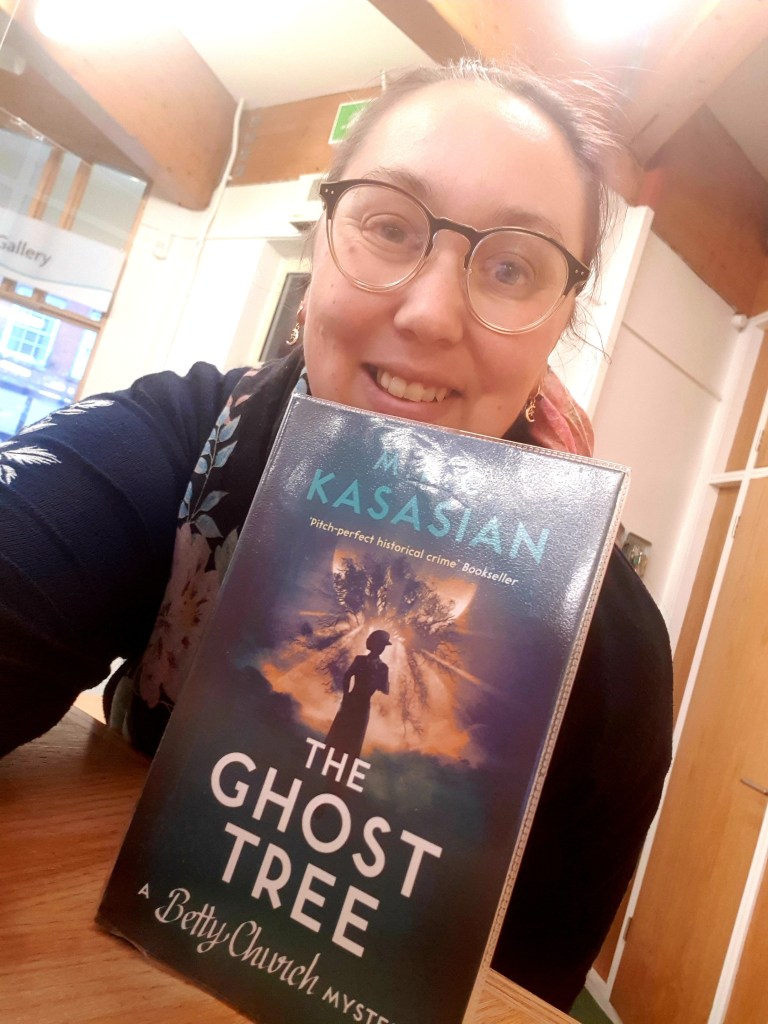
Sera with the Tenbury Library copy in paperback of The Ghost Tree: A Betty Church Mystery
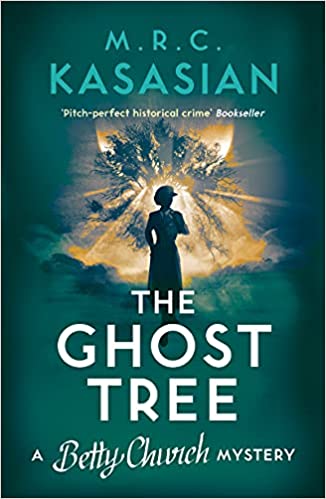
Hello, Its Sera again. A new mystery has arrived at Tenbury Library and you can find it on our Quick Choice Shelf. – What starts as a simple story of a runaway girl turns into a brilliantly twisty tale. The story is split over two time lines both with our lead character narrating. Betty doesn’t disappoint solving both crimes and unraveling the trail of misconception. Betty’s childhood friend Etterly, running from something, hides inside the trunk of a tree and disappears. nothing can be done as the trail goes cold on the police.June, 1940: Inspector Betty Church is alerted to a skeleton being dug up in a local woods. Though most clues have long since decayed, it is wearing an unusual necklace, Etterly’s necklace. A World War Two crime for fans of Agatha Christie. I’m a fan of M.R.C. KASASIAN since the March Middleton series. So, I’m defiantly going to borrow The Suffolk Vampire, I will let you know if its just as good 🙂
Is it part of a series? yes, Betty Church and the Suffolk Vampire is Book 1 The Room of the Dead (A Betty Church Mystery): Book 2 and The Ghost Tree (A Betty Church Mystery): Book 3
Hello, I’m Seraphim “Sera” and I’m a Library Customer Assistant at Tenbury Wells Library part of Worcestershire Hub. Part of my day is finding out what kinds of books and titles folks are interested in. Recently, a friendly patron at the library asked me “Sera, what are you reading?” which opened a discussion.
So, in the spirit of sharing and encouraging all ages to read I’d like to tell you what this eclectic reader is reading currently.
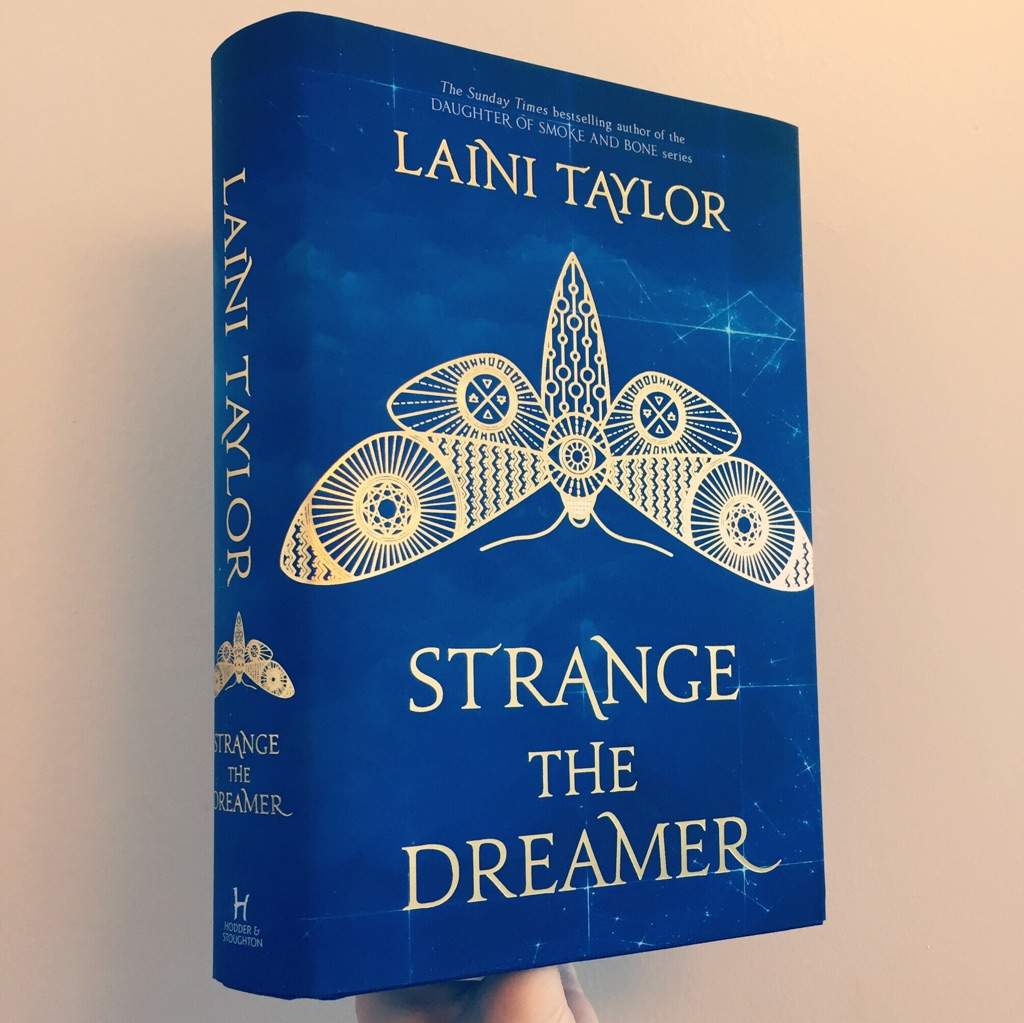
STRANGE THE DREAMER is beautiful, the cover took me straight away. I have an illustration degree, so I do-“judge a book by its cover” partly at least. The cover is not the only beauty in this unusual fantasy, an unexpected story which has so many great characters that it’s very hard for me to pick a favorite. The narrative is easy to follow, which is so important in high fantasy such as this. Action is placed well in order to keep the motivation to stay in the story world. Worldbuilding is intense and wholly original, information and description is wound nicely into characters and scenes because there is so much going on, but, still very readable and fluid. Taylor is a very good writer.
If you are interested in finding a copy for yourself, our libraries at Bromsgrove, Kidderminster, Droitwich, Redditch and The Hive Worcester. Alternatively, please check out our website catalogue: https://wcc.ent.sirsidynix.net.uk/client/en_GB/wcc/entlogin
What was the sequel like?
Amy at home with her copy of Muse of Nightmare’s by Laini Taylor
13/12/2021 : The novel follows immediately on from Lazlo Strange and the ghost of Sarai, in the angle and in danger. this book unlike the first is not as balanced between emotional story and action. in distance the characters travel? no far. In the growth of characters maturity? massively. Killing and the choice to kill is the main issue around our new forging teams. The earth bound and the “god-sporn” have a new challenge on top of the problems about reconciliation. Vengeance feeling good in the moment and right somehow verses the knowledge that destroying the enemy would be destroying any hope for yourself and your own kind. Does foregoing vengeance mean that justice must fall by the wayside? A darker more twisted narrative and at the very limits for some young adult readers. Defiantly a teen to adult fantasy adventure.
A little writing guide here. It’s not a definitive guide on- How To Write A Short Story. Although, it will give you a few pointers as to what our judges look for when they’re reading entries.
The beginning. Make sure you grab the reader’s attention immediately. You don’t have many words, so use them wisely. Make sure you establish the tone, setting and character as quickly and efficiently as possible.
Character. Yes, this is a bit of an obvious one, but make sure your characters are believable and well-rounded. This seeps into the dialogue they speak, the actions they take (or don’t take), the motivations they have. It doesn’t matter if your protagonist is a down-and-out Santa, a middle-aged man looking back over his life, or a flip-flop, make sure their character is consistent throughout.
Plot and conflict. Another obvious one, but you’d be amazed how many stories we receive that don’t even get anywhere near the longlist because, quite frankly, nothing happens. Give your main character a problem to face – and make it one that the reader will care about. Use your 1500 or 500 words to work towards a satisfying ending. Even pantsers can benefit from a bit of planning, and even the shortest of stories can benefit from having the three-act structure applied to them.
The title. Our rules state that your maximum word count doesn’t include the title – so use that to your advantage. Now, we’re not saying that your title can be 200 words long! But a carefully chosen title that really complements the story and adds a deeper degree of resonance will undoubtedly catch our judges eyes.
The mechanics. Check your spelling. Your grammar, your punctuation. Make sure you manuscript is professionally presented and properly formatted. Yes, it’s the story being told that is ultimately the most important thing, but if there’s only one slot left on the shortlist and two equally enjoyable stories, it’s the sloppy looking document, littered with spelling and punctuation mistakes, that will end up on the reject pile.
The rules. Read the rules… READ THE RULES… READ. THE. RULES. And then, before you finally submit, go back and read them one last time to make sure you’ve stuck to them. Make a checklist if you have to, and go through it to make sure your story doesn’t fall at the first hurdle.
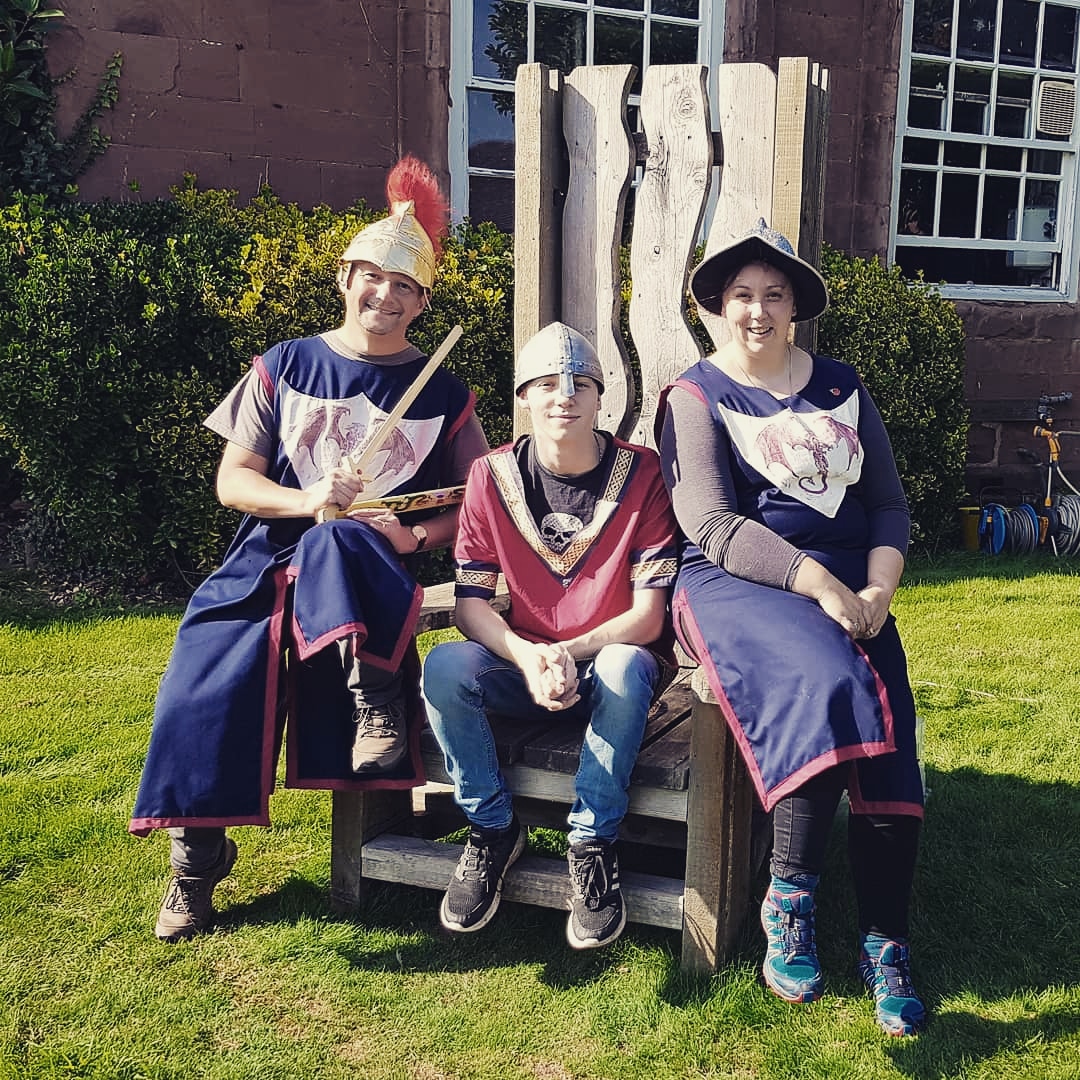
When i’m not studying National Heritage and History I moonlight as a storyteller and one half of a writing team with Kevin Brooke published Children’s author from Worcestershire.
This weekend as part of World Heritage Day [19-20 September] we were invited to Harlebury Castle to make some stories about their history and preform them to visitors on the day.
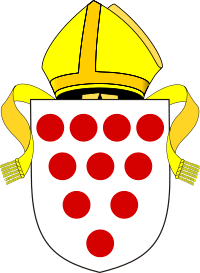
Hartlebury Castle tells the story of the bishops of a major middle England plot of land and their evolving role in English society, from political and military guardians of a frontier with Wales to active participants in political decision making in modern times. They number a pope (Clement VII) who played a key role in precipitating the establishment of the Church of England; Bishops Latimer and Hooper, Protestant martyrs of the Reformation; and Bishop Hurd, friend to King George III and creator of the Hurd Library.
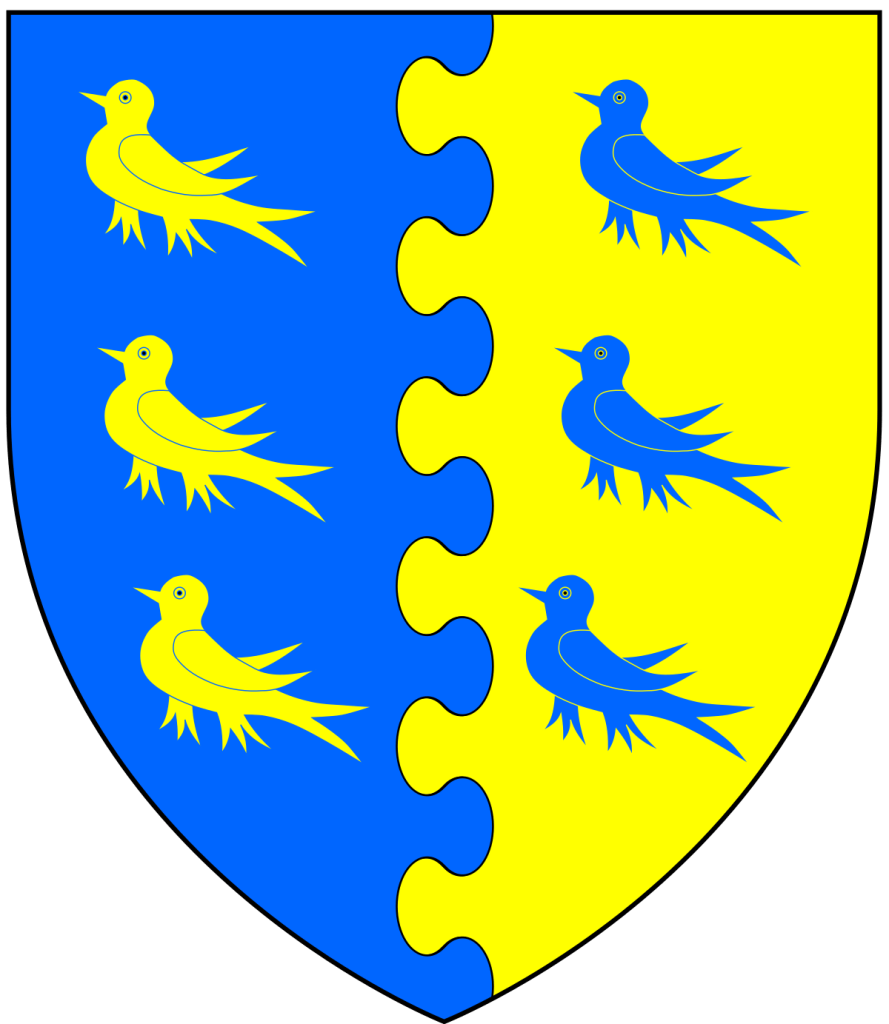
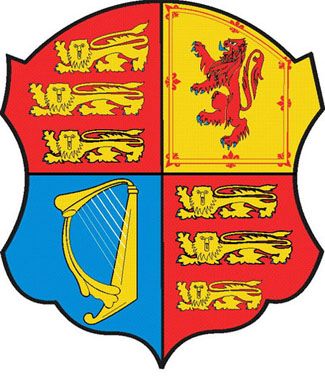
The great hall at Hartlebury has some of the most interesting and rare examples of Coats of Arms and the Hurd library too contains much of the information in its ancient books on how and why we have Coats of arms.
So, how did shields become Coats of Arms?
The ancient Romans used various symbols called insignia on their shields so that they could identify their different military units of soldiers.
The first real use of what we now know as coats of arms is portrayed in the Bayeux Tapestry which illustrates the Norman invasion of 1066, where some of the soldiers are carrying shields that have crosses and other symbols painted on them. However, by the 1100s, coats of arms came into more general use by feudal lords and knights in a battle to identify their soldiers and their opponents. By the 1200s, coats of arms had become a flag or emblem for noble families and inherited from one generation to the next. In Britain, only the aristocracy had the right to arms, with their serfs, servants and knights having these emblems as part of their ‘uniform’ when fighting on the battlefield for their Lord and Master. Eventually, the use of arms spread to the clergy, to towns, and places such as universities and trading companies; and so flags developed from coats of arms. The coats of arms that we are familiar with today were originally one person’s emblem. They were legal property which passed from father to son; however, wives and daughters could bear modified arms to show that they were related to the current holder. Other relatives of the original bearer of arms could use the family coat of arms but with a little bit of difference; maybe a colour change or an extra emblem. Coats of arms were essential in identifying people and used in seals on critical legal documents, and so their use was closely controlled. All coats of arms were tracked and recorded by heralds or agents to the King or Queen. which is why the study of coats of arms is called ‘heraldry.’
Did you know that the colours, animal, fruits, flowers and other objects used on the coats of arms all have different meanings?
Here are some of the meanings of the most used colours:
White stands for purity, innocence, peace and honesty
Gold stands for wisdom, glory, generosity and grandness
Green stands for happiness, love, and well-being
Red stands for strength and bravery
Purple stands for justice and is a royal colour used by Kings and Queens
Black stands for wisdom and sometimes grief
Blue stands for truth, strength and honour
The animals, fruit and flowers on coats of arms also have special meanings, here are some of the most used ones:
Apples, berries and grapes mean kindness, happiness and peace
Bay leaves stand for a poet or triumph
Oak trees or leave mean great strength and age
Olive branches or leavesstandfor peace and harmony
Roses are the mark of the seventh son -a red rose means grace and beauty; a white rosemeans love and faith
Bear stands for strength, cunning and defending your family
Dolphinmeans swiftness, love, charity and salvation
Dovemeans love and peace
Eagle is the sign for someone with a noble nature, bravery, strength and protection
Elephantmeans strength, happiness, luck and royalty
The horse stands for being ready for anything to do good for King and country
Lamb means gentleness and patience
The lion stands for great courage
Stagger stag’s antlers mean peace, harmony, strength and stamina
Swan means light, love, grace and perfection
Tiger stands for fierceness, bravery and fury
Mythological creatures are also often used on coats of arms, and these also have special meanings:
The dragon stands for a defender of treasure, courage and protection
Mermaidmeans eloquence
Pegasus (a winged horse)is the sign for inspiration and is considered a messenger of God
Phoenix is a symbol of resurrection
Sphinxstands for secrecy and knowledge
Unicorn(a horse with one horn)stands for extreme bravery, strength and truth
Crosses and angels are a sign of Christianity and stand for dignity, honour and glory.
here are some other meanings of the different angels and crosses you sometimes find on coats of arms :
An angel or a cherub means dignity, glory and honour and joyful news
Cross is a sign for faith and service in the Crusades
Celtic Cross shows heaven and earth as one
Cross Flory (flowered at each end)means one who has conquered
Seraphim(angel with three pairs of wings)means bearer of joyful news
Some other objects are also included on coats of arms and their meanings:
Anchor means hope
Bells mean the banning of evil spirits
Harp stands for the bridge between heaven and earth and also for a person who has good judgement
A plume of feathers is a sign of obedience and peaceful minds
Shell stands for a traveller to far off places
Sword, dagger or dart shows justice and military honour
Hope this helps you make or enjoy your own Coat of Arms.




 Oak Tree and Stars by BlueFalcon1983